Across the year, we performed 661 embryo transfers. Most were carried out at the blastocyst stage (98.6%, and almost all involved transferring a single embryo (93%). This approach helps keep treatment as safe as possible and supports patients who want to minimise the chance of a multiple pregnancy.
The types of transfers performed varied. More than half were frozen embryo transfers following preimplantation genetic testing using own eggs (PGT, 57%), while others involved frozen untested embryos (28%), fresh transfers (6.5%), or donor egg treatment (8.5%). Each pathway reflects different needs, circumstances, and preferences for each individual or couple.
Our aim in sharing these figures is not to compare journeys or set expectations, but to offer transparency about the care we provide. If you’re exploring treatment options, these numbers can be a helpful starting point for conversations with your clinical team about what feels appropriate for you.
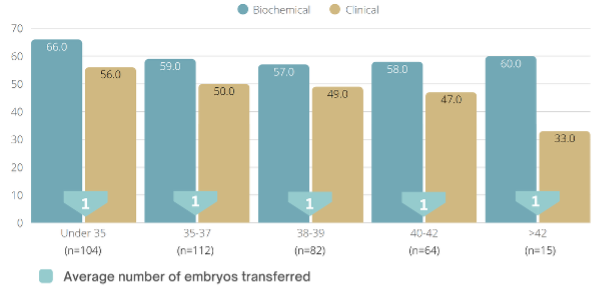
PGT biochemical and clinical pregnancy rate per embryo transfer
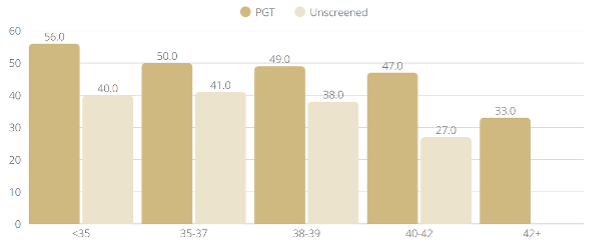
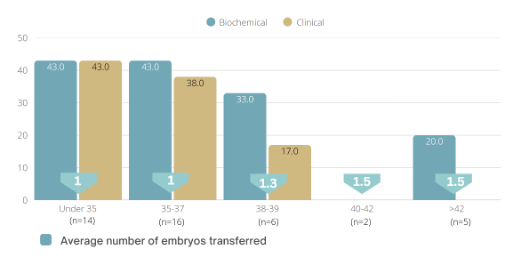
The table below shows the biochemical and clinical pregnancy rates per transfer for embryos that were tested with PGT in 2025. Biochemical pregnancy rate is calculated using the number of cycles with a positive pregnancy test divided by the number of transfer cycles, shown as a percentage. Clinical pregnancy is confirmed by the observation of foetal heartbeat on an ultrasound scan.